His life
Henry Leopold Richter, Ph.D., PE
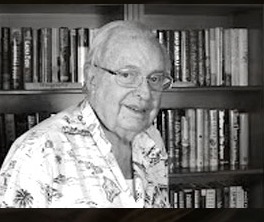
Born June 14, 1927, Long Beach, California. Died August 12, 2026, Escondido, California. Space pioneer, communications engineer, telecommunications consultant, author, singer, amateur radio operator W6VZA, and late-in-life watercolorist.
Early years
Henry was the eldest of the two children of Henry L. Richter, Sr., and Catherine Moore Richter, both accomplished artists. When he was seven, his aunt gave him a chemistry set and his parents turned their dining room into a chemistry lab for him.
As a teenager he had a strong singing voice and joined the St. Luke’s Choristers, the men-and-boys choir of St. Luke’s Episcopal Church in Long Beach, which performed in concerts and motion pictures, most notably Mrs. Miniver in 1942. He also became an amateur radio operator at age 14, a hobby that shaped the rest of his professional life. He earned his license in 1942, but wartime rules kept him from receiving a call sign until 1946, when he became W6VZA. He graduated with honors from Narbonne High School in 1945, receiving the first Bausch & Lomb science medal in the school’s history.
Navy and Caltech
After high school Henry enlisted in the U.S. Navy and served about sixteen months as an electronic technician’s mate at the tail end of World War II, including time aboard the destroyer USS John A. Bole. During training in Chicago he met Marilyn Wood and they were married in 1947. The couple settled in Pasadena, and had five children: Gail, Norman, David, Steven and Jan.
After his discharge he joined the Association of Public-Safety Communications Officials and the California Public-Safety Radio Association in 1946 and briefly began a career in public-safety radio, a field he would return to decades later.
At Caltech Henry earned a BS in 1952 and a PhD in 1956 in chemistry, with minors in physics and electrical engineering. He was Caltech’s first Newmont Fellow. His graduate work on nuclear magnetic resonance absorption caught the attention of JPL.
JPL and Explorer 1
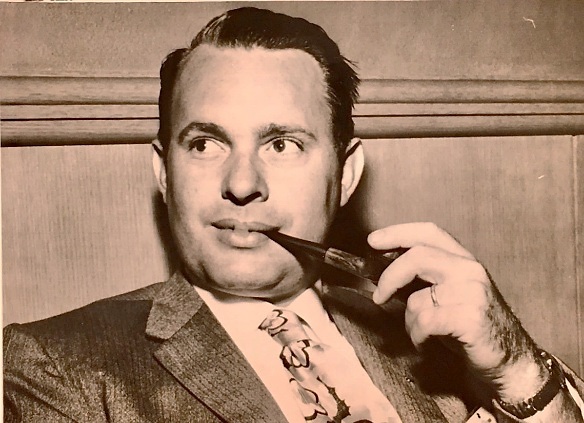
Henry joined JPL in 1955 and rose from supervisor of the New Circuit Elements Group to Chief of the Space Instruments Section. Working with the San Gabriel Valley Radio Club, of which he was president, he set up satellite tracking stations across the United States that were already operating when the Soviet Union launched Sputnik 1 on October 4, 1957.
In the scramble that followed, Henry was placed in charge of the satellite’s scientific instruments and its communications with the ground. He lobbied to carry Dr. James Van Allen’s Geiger counter aboard. In just ninety days the JPL team, working with Wernher von Braun’s group in Huntsville, built and launched Explorer 1. Its communications package, which Henry’s section developed, carried two transmitters, each with four telemetry channels. On the night of January 31, 1958, Henry was the first to confirm the satellite had reached orbit through a ham radio tracking station; the club’s station in Temple City was the first to report “Temple has acquired” as Explorer 1 circled the Earth for the first time. The satellite transmitted data on micrometeorites and cosmic radiation for 105 days. Van Allen’s instrument went on to reveal the radiation belts that now bear his name, after analyzing the data from Explorer 1 and a full-orbit tape recording from Explorer 3 showed the detector was being saturated.
In August 1958 he was invited to present a paper in Moscow for the International Geophysical Year. Henry taught himself enough Russian from an instructional tape to read the paper aloud and answer two questions in Russian, which made him, by one account, the hit of the American delegation.
Before leaving JPL in 1960 Henry helped develop a large number of scientific instruments for the next generations of Explorer satellites and the Ranger, Surveyor and Mariner programs, the first American missions to the Moon, Mercury, Venus and Mars. He also helped plan the world-wide tracking network that became the Deep Space Network, conducting site surveys in California, Australia and Spain.
In 2015 Henry wrote America’s Leap Into Space: My Time at JPL and the First Explorer Satellites, based on his own recollections and records, accounts from other personnel involved in the US space program, and research in JPL’s archives. Henry also participated in a film, Explorer 1: JPL and the Beginnings of the Space Age.
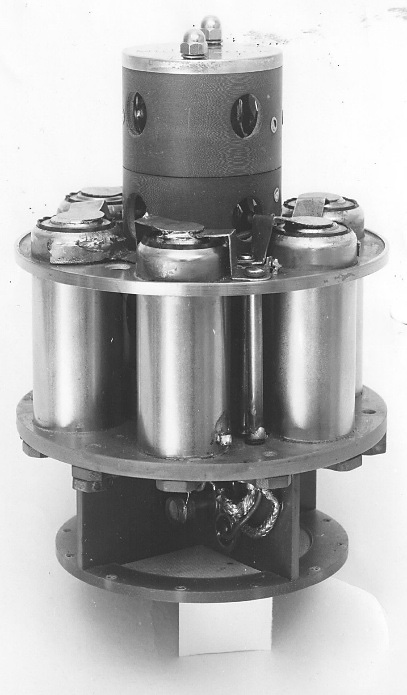
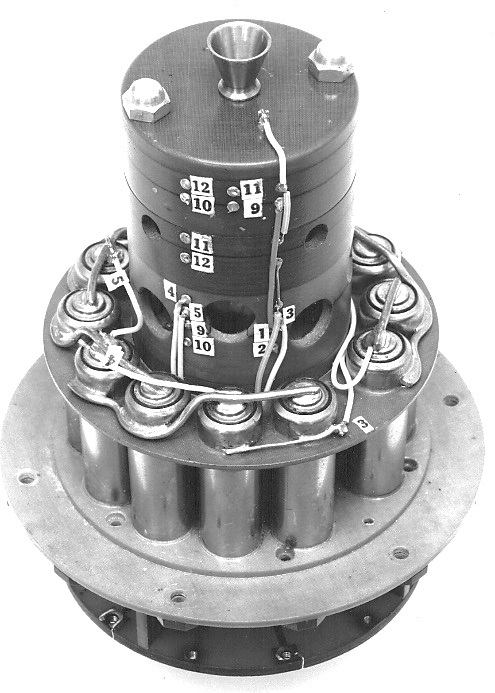
Henry’s efforts to preserve Explorer 1’s history were well known at the JPL Library and at the Smithsonian Institution, and he returned to the laboratory regularly to tell stories, offer guidance and give presentations. When JPL discarded a backup of the Explorer 1 transmitter made in 1958, Henry personally restored it between 1993 and 1996 and donated it to the Smithsonian in 1997 for the satellite’s fortieth anniversary. It remains on display at the National Air and Space Museum’s Steven F. Udvar-Hazy Center near Dulles Airport.
Industry and other ventures
Henry left JPL for a job at Electro-Optical Systems, EOS, in Pasadena, which later became Xerox Electro-Optical Systems and is now part of Loral, where he became Vice President and Technical Director and later Vice President of Marketing. He supervised research, engineering and production in communications, upper-atmosphere rocketry, tracking and telemetry, space power and propulsion, scientific instruments, semiconductors, computing, biosciences and military hardware. After leaving EOS, Henry joined UCLA as a Senior Research Geophysicist on the staff of Nobel laureate Willard Libby and as Development Manager for the proposed Mountain Park Research Campus, a project that was never completed, and for a time owned an electronics manufacturing company.
Public safety and consulting
Henry’s involvement in ham-radio disaster communications led the Los Angeles County Sheriff’s Department to hire him in the mid-1970s as Communications Engineer for its extensive microwave and mobile radio networks. From 1977 he built a telecommunications consulting practice that grew into The Richter Group, a collaboration of independent consultants, and continued working well into his eighties.
His clients included the federal government; the States of Arizona, California, Nevada and Oklahoma; the Counties of Hawaii, Kauai, Maui and Oahu; the California Counties of Marin, Riverside, San Diego, San Joaquin, Sonoma, Ventura and Yolo; over sixty cities in eight states, among them Boston, Fairbanks, Honolulu, Kodiak, Long Beach, Los Angeles and San Diego; special districts such as the Los Angeles County Metropolitan Transportation Authority and the South Bay Regional Public Communications Authority; the Los Angeles and San Diego Unified School Districts; Caltech, the University of California and Azusa Pacific University; and dozens of private-sector clients. The work ranged from strategic IT planning and telephone systems to computer-aided dispatch, microwave networks, and conventional and trunked public-safety radio systems.
Faith and family
Henry described his early years as those of a busy churchman who did not really believe what he heard. Beverly Ott, his secretary at Electro-Optical Systems, had a faith he could not explain away, and her witness led him to study the Bible for himself. On October 4, 1969, driving on the 210 Freeway, he was overwhelmed by the presence of Christ, and that evening answered the invitation at a Billy Graham crusade in Anaheim Stadium. His prayer, as he told it later, was simple: “Lord, if you want me, I sure want you.”
Henry and Beverly married in 1970 and were together until her death in 2018. They lived in Arcadia and Palm Springs before moving in 2010 to Meadowbrook Village Christian Retirement Community in Escondido. He sang in church choirs all his life, including many years at Lake Avenue Congregational Church in Pasadena, spoke at dozens of mayors’ and civic leaders’ prayer breakfasts, and served for several years as Southwestern Division Director on the national staff of the Christian Business Men’s Committee.
As a scientist, he came to see the universe and living things as too finely designed to be accidents. That conviction produced The Universe: A Surprising Cosmological Accident in 2006, Spacecraft Earth in 2017, and a steady stream of essays. “All those amazing designs I saw in nature,” he said, “now make sense.” In his early nineties he took up watercolor painting, inspired by his parents.
Henry passed away in his sleep on August 12, 2026, at his home in Escondido. He is survived by two children, four grandchildren, six great-grandchildren, and one great-great-grandchild.
Honors and memberships
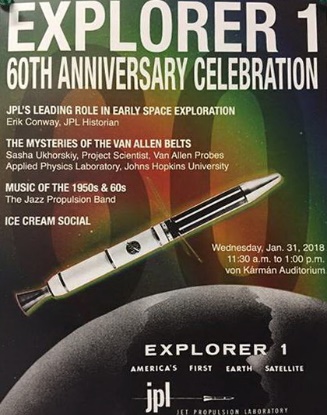
In 2008 the American Institute of Aeronautics and Astronautics presented its Annual Achievement Award to JPL for Explorer 1, and Henry was honored alongside the lab’s present and three former directors as a Spaceflight Pioneer. In January 2018 he returned to JPL as an honored guest for the sixtieth anniversary of Explorer 1, speaking about his experiences. In 2019 the Radio Club of America, RCA, gave him its Lifetime Achievement Award. On November 21, 2026, RCA will present his family with a posthumous honorary Centenarian Award at its annual banquet in recognition of his many contributions to radio science.
He was a Senior Life Member of the IEEE, a Senior Member Emeritus of the American Chemical Society, a Senior Member of the American Geophysical Union, a Life Member of the Association of Public-Safety Communications Officials, a member of the Radio Club of America since 1980 and later a Life Member, and an elected member of the New York Academy of Sciences. He served on the National Industrial Advisory Committee to the Federal Communications Commission and on the National Bureau of Standards’ Evaluation and Advisory Panel on Time and Frequency. He held a First Class Radiotelephone License and an Amateur Extra Class license, and was a retired California Professional Engineer (QU5567).
Timeline
Ninety-nine years
- June 14, 1927Born in Long Beach, California
Eldest child of Henry Sr. and Catherine Moore Richter.
- 1942Receives his ham radio operator’s license
Sings in Mrs. Miniver with the St. Luke’s Choristers of Long Beach. Wartime rules delay his call sign, W6VZA, until 1946.
- 1945Graduates Narbonne High School
U.S. Navy electronic technician’s mate at the end of World War II.
- 1952 · 1956Caltech BS and PhD
Chemistry with physics and electrical engineering. First Newmont Fellow.
- 1955Joins the Jet Propulsion Laboratory
Chief of the Space Instruments Section.
- Jan 31, 1958Explorer 1 reaches orbit
Henry is the first to confirm it. The Van Allen belts are discovered.
- Aug 1958Presents in Moscow, in Russian
International Geophysical Year meeting.
- 1960Vice President, Electro-Optical Systems
Leaves JPL for industry in Pasadena.
- 1966UCLA and his own electronics company
Senior Research Geophysicist and Development Manager for the proposed Mountain Park Research Campus.
- Oct 4, 1969Becomes a Christian
Billy Graham crusade, Anaheim Stadium. Marries Beverly Ott in 1970.
- Mid-1970sL.A. County Sheriff’s Department
Communications Engineer, then 35 years of consulting as The Richter Group.
- 2006 · 2015 · 2017Three books
The Universe, America’s Leap Into Space, Spacecraft Earth.
- 2008AIAA Spaceflight Pioneer
Honored with JPL’s directors in Washington, D.C.
- 2018Explorer 1 at sixty
Returns to JPL to speak.
- 2019RCA Lifetime Achievement
Honored by the Radio Club of America.
- Aug 12, 2026Dies in Escondido, California, aged 99
Survived by two children, four grandchildren, six great-grandchildren and one great-great-grandchild.
- Nov 21, 2026RCA Centenarian Award (Honorary)
Presented posthumously to his family at the Radio Club of America banquet.